
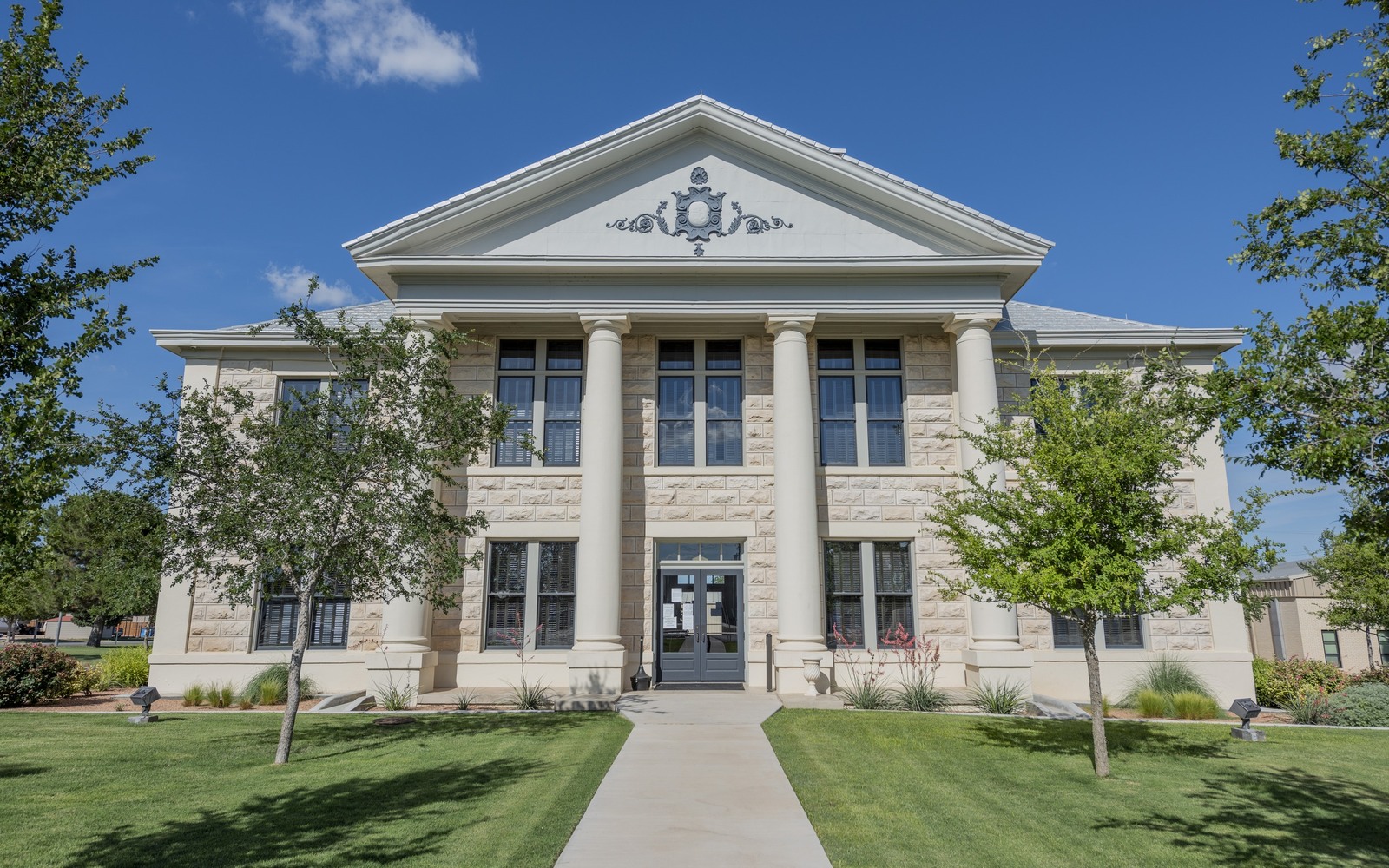
Glasscock County has fewer than 1,300 residents and almost no incorporated towns, yet it sits under some of the thickest, most productive Wolfcamp and Spraberry rock in the entire Midland Basin.
Garden City, the county seat, is unincorporated and tiny, more courthouse and crossroads than town. That's the defining fact about Glasscock County: it's almost entirely rural ranchland, held by a relatively small number of longtime families, sitting directly over the deepest part of the Midland Basin's stacked pay. Operators have drilled some of the highest lateral counts per section anywhere in the basin here, because the rock supports it.
For mineral owners, that combination, sparse population and dense drilling, means your interest is likely tied to a large ranch-family block rather than a small town-lot fraction, and the unit above it may host more wellbores per section than almost anywhere else in the Permian.
Stacked Pay and Multi-Bench Development
Glasscock County's Wolfcamp and Spraberry section is unusually thick, and operators have responded by developing multiple benches within the same spacing unit, sometimes drilling six, eight, or more laterals under a single section at different depths and staggered spacing. That density is part of what's made this county one of the most closely watched in the Midland Basin for well-spacing studies.
If your minerals sit under one of these dense multi-well units, your division order should reflect participation across each producing wellbore separately. Checking that every completed well in your unit shows up on your statements is worth doing before you value the interest.
Large Ranch-Held Ownership Blocks
Because Glasscock County's land history runs through a handful of large historic ranches rather than dense small-town platting, mineral ownership here tends to be less fractionated than in more populated counties. Owners often hold a cleaner, more sizable interest tied to one family tract, which simplifies title verification.
That said, generational transfers still happen, and interests originally held by one ranch family can end up split among a dozen or more heirs over decades. Confirming the current chain of title through the county clerk is still the first step, regardless of how the original block was structured.
Well Density and Future Drilling Potential
Because so much of Glasscock County's productive rock has already seen aggressive development, some sections are approaching full build-out, meaning fewer new locations remain to be drilled. Other blocks, particularly on the county's edges, still have meaningful undrilled inventory.
That distinction matters for valuation. A section that's already hosting its expected well count is priced primarily on current and near-term production, while acreage with real remaining inventory carries more upside tied to future drilling, and a fair offer should reflect which situation applies to your specific tract.
Why Buyers Watch Glasscock County Closely
Industry attention on Glasscock County has stayed high for years precisely because the rock quality here is so consistent. That consistency gives buyers more comparable data to work from than in counties where results swing widely from section to section, which generally makes pricing conversations more straightforward.
For an owner, that translates into a clearer picture up front: recent offset completions near your acreage are a genuinely useful guide to what your interest is likely worth, rather than a loose approximation drawn from the wider basin.
Selling From Outside the County
Given how few people actually live in Glasscock County relative to the value of what's produced there, it's common for mineral owners to be scattered across Texas or even out of state, sometimes with limited recent contact with the operator managing their unit.
We handle the entire process, from title verification through closing, without requiring travel to Garden City, which matters given how remote the county seat actually is from most major cities.
Midland acquisitions desk
Questions Permian Owners Ask
These answers identify the controlling record, basin fact, title exception, timing issue, or offer term that still needs a documented answer.
Why is Glasscock County considered such core Permian acreage?
The Wolfcamp and Spraberry section here is unusually thick, supporting multiple productive benches stacked within a single spacing unit. That geology has drawn some of the densest horizontal drilling in the Midland Basin.
the owner's interest is part of a large ranch-family tract. Is it easier to sell?
Often yes. Ranch-held blocks tend to be less fractionated than town-lot interests, which can simplify title verification, though we still confirm the full current chain of ownership through county records before closing.
How does an owner know if the owner's unit still has undrilled locations left?
We check current well counts and permits against the spacing pattern in your specific section, since some Glasscock County acreage is already fully developed while other blocks still have meaningful drilling inventory remaining.
Does living far from Garden City complicate a sale?
No. Most Glasscock County mineral owners live outside the county, sometimes far outside Texas, and the entire process, from title verification to closing, can be handled remotely.
Why do buyers pay closer attention to Glasscock County than some other counties?
The consistency of the rock across the county gives buyers more reliable comparable data, which tends to make pricing more grounded in recent offset results rather than a broad basinwide estimate.
the owner has not been in contact with the owner's operator in years. Is that a problem?
Not for us to evaluate your interest. We identify the current operator and pull recent production data as part of the offer process, so a lapse in your own communication with them doesn't hold things up.
Next property file
Continue the Permian sale brief
County records, deed schedules, producing evidence, and title questions carry straight into each of these connected reviews.
Contact us
Put This Interest on a Permian Sale Brief
Describe the county and state, interest type, producing status, operator or payor if known, recent checks if available, records already gathered, and the decision window.